

- Flooring
Hardwood vs. LVP: What Actually Works in Colorado’s Dry Climate
August 19, 2026
The Question Boulder Homeowners Ask More Than Any Other
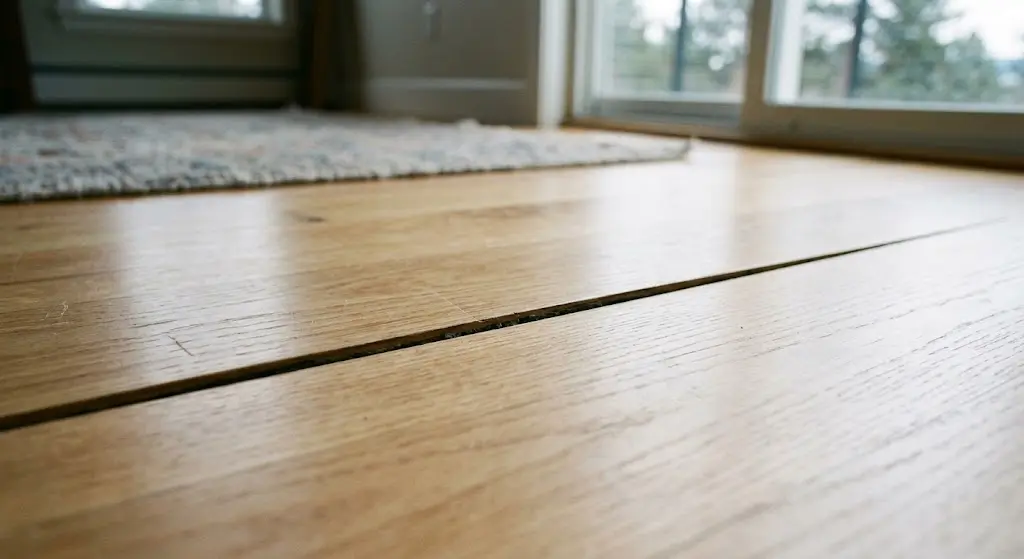
Solid hardwood floors are responsible for a phenomenon Boulder contractors have quietly dealt with for decades: the winter gap. By January, planks that fit tight in October can develop cracks wide enough to catch a coin. Colorado’s Front Range drops to relative humidity levels below 20% in winter, one of the lowest readings in the contiguous United States, and that single fact changes everything about how you should choose flooring.
You’re planning a remodel. You’re weighing hardwood against luxury vinyl plank (LVP). The honest answer is that both can work in Boulder, but not in the same rooms, and not without understanding what Colorado’s climate will do to each material over time. Stop in any day to visit the Star Flooring & Design showroom at 5785 Arapahoe Ave, Suite D, or call (303) 444-3411 to talk through your project before you commit.
Why Boulder’s Climate Makes This Decision Harder Than It Looks
Most flooring advice online is written for average American conditions: humidity around 45%, mild temperature swings, and soil that stays reasonably stable. Boulder, Colorado is none of those things.
The Humidity Problem Is Real
According to NOAA climate data for Boulder County, average relative humidity swings from roughly 60 to 65% in late summer monsoon season down to 18 to 25% during peak winter months. The NWFA recommends maintaining indoor humidity between 35% and 55% for solid hardwood floors. Boulder’s winters routinely fall 10 to 15 percentage points below that floor.
What happens at 18% relative humidity? Solid wood planks shrink along their width. A 3.25-inch-wide solid oak plank can contract up to 3/32 of an inch in one heating season. Across a 15-foot-wide room, you end up with dozens of small gaps at every joint, visible, recurring, and impossible to reverse without addressing the humidity source.
In our experience over 60+ years of Boulder installations, solid hardwood installed without active humidification gaps visibly during the first winter in the majority of cases. It’s the single most common regret we hear from homeowners who chose solid over engineered.
Engineered hardwood handles this far better. Its cross-layered plywood core resists expansion and contraction even when interior humidity swings wildly, making it the practical choice for Boulder homes that don’t have integrated whole-house humidification systems.
High Altitude Means More UV Damage
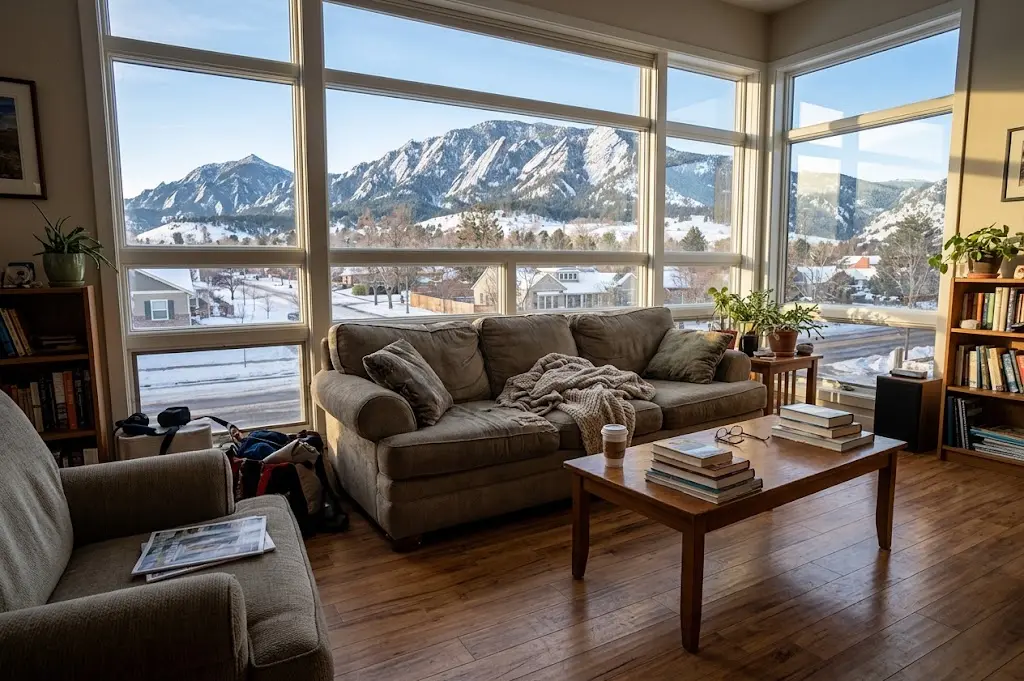
Boulder sits at 5,430 feet above sea level. At that altitude, UV radiation is roughly 25% more intense than at sea level. For west-facing rooms with large windows, common in Boulder homes oriented toward the Flatirons, natural wood floors like cherry, walnut, and even some species of oak will amber, bleach, or develop uneven fading more quickly than homeowners expect.
Modern SPC LVP uses enhanced UV-inhibitor topcoat layers that significantly reduce this effect. If your living room gets direct afternoon sun from a mountain-view window, SPC LVP has a clear durability edge in that specific space.
Snow, Salt, and Trail Grit
Boulder’s active lifestyle means entryways and mudrooms absorb snow melt, trail dirt, and magnesium chloride road salt every winter. Magnesium chloride is hygroscopic, meaning it actively draws moisture from the air and holds it against your floor’s finish. Prompt cleanup with a damp (not wet) cloth removes the residue before it works on the coating.
Matte and wire-brushed hardwood finishes hide micro-scratches better than semi-gloss, and they’re trending in Boulder for exactly that reason. Just confirm with your design team that your chosen matte finish is compatible with touch-up products before you commit. This matters more than most salespeople mention.
Caring for Your Floor Long-Term in Colorado’s Climate
Here’s the thing about floor maintenance in Boulder: the dry air does half the work of wearing down a finish, even before a single boot crosses the threshold. For hardwood, a whole-house humidifier isn’t a luxury, it’s protection for a significant investment. Target 35 to 45% indoor RH year-round.
SPC LVP is lower maintenance by design, but it isn’t zero-maintenance. Standing water at plank joints can migrate to the subfloor over time. Wipe spills promptly. Use pH-neutral cleaners, nothing with wax or oil-soap additives, which can build up on the wear layer and dull the finish permanently.
For both materials, felt pads under furniture legs and a quality entry mat at every exterior door will do more to extend floor life than any cleaning product on the market.
| Pro-Tip from the Star Flooring & Design TeamIn older Boulder neighborhoods like Mapleton Hill and Newlands, many homes were built on clay-heavy soils that retain moisture longer than newer construction in Broomfield or Frederick. Before any hardwood installation in those areas, we always run a full subfloor moisture assessment first, whether you have a concrete slab, a crawl space, or a wood subfloor. Skipping that step is the single most common reason wood floors cup in the first year. |
Hardwood vs. SPC LVP: The Real Decision Guide for Boulder CO Homes
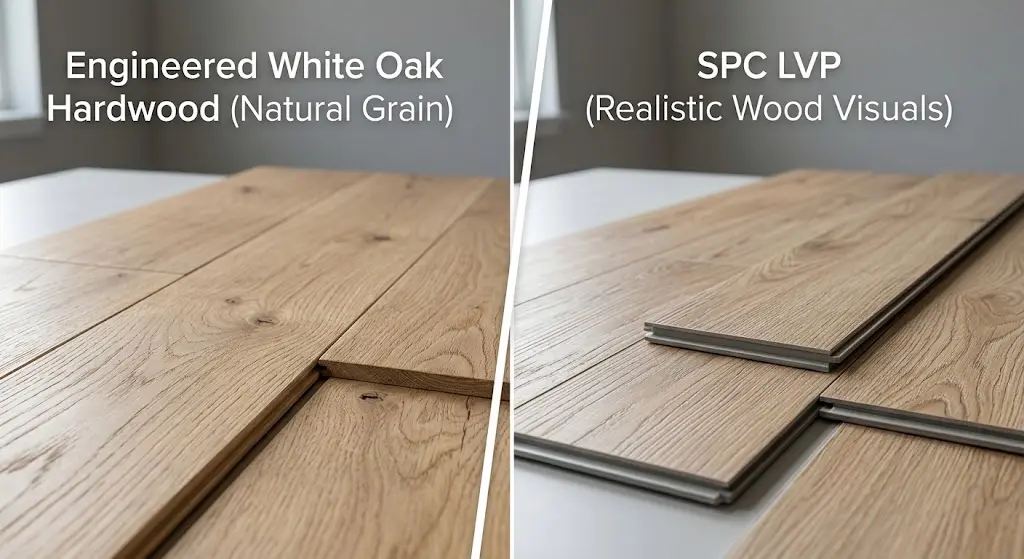
This isn’t a case where one material wins across the board. Honestly, most homeowners overthink the comparison when the answer is simply room-by-room.
Where Engineered Hardwood Still Wins in Boulder CO Homes
Living rooms, dining rooms, and bedrooms in homes with reasonable humidity control are where engineered hardwood earns its premium price. Brands like Kahrs and Anderson Tuftex engineer specifically for dimensional stability, and their click-lock and glue-down products hold up well in Colorado conditions.
Engineered hardwood adds real resale value too. In Boulder’s competitive real estate market, hardwood floors in main living areas typically return 75 to 85% of installation cost at sale. Buyers associate genuine wood with quality construction, full stop.
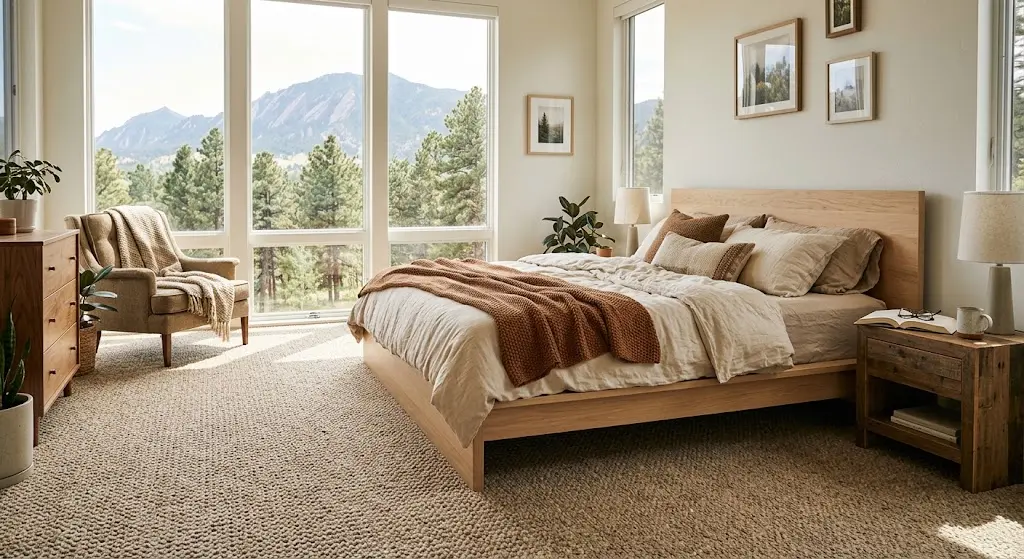
For primary bedrooms where warmth and quiet matter more than durability, wool carpet is worth serious consideration. Boulder’s dry winters make carpet comfortable in ways that surprise homeowners who rule it out without trying it.
- Living spaces: living rooms, dining rooms, primary bedrooms, home offices with humidity control
- Best Colorado species: white oak and hickory, both more dimensionally stable than cherry or maple at low humidity
- Worth considering: Kahrs (Sweden-engineered for climate extremes), Anderson Tuftex, Hallmark Floors
Where SPC LVP Makes More Sense
SPC (Stone Plastic Composite) LVP is the right call for any room that sees moisture, temperature swings, or heavy daily use. Basements, mudrooms, kitchens, laundry rooms, and playrooms are all spaces where SPC LVP’s waterproof rigid core simply removes the risk of cupping and swelling.
Note: while the SPC core won’t absorb water, prompt cleanup of standing water still protects the subfloor beneath any floating floor. That caveat aside, for Boulder families who ski, hike, and trail-run year-round, SPC LVP in the entryway isn’t a compromise. It’s the smarter choice.
High-end SPC products from brands like Karndean and TRUCOR carry wear layers of 22mil or higher, which is the clear protective coating over the vinyl surface. That spec matters for grit resistance. Budget LVP at 6 to 12mil wears through in high-traffic zones within a few years.
- Best-fit rooms: basements, mudrooms, kitchens, bathrooms, laundry rooms, playrooms
- Spec to verify: 22mil or higher wear layer, SPC rigid core (not WPC), attached underlayment for sound reduction
- Worth considering: Karndean, TRUCOR, Mannington
Not sure which material fits your space? Try the Roomvo visualizer on our website. Upload a photo of your room and see engineered hardwood, SPC LVP, carpet, and more before you ever set foot in the showroom.
| “Tracey was so helpful and knowledgeable yet not pushy. My luxury vinyl floors have transformed my space. From start to finish I was impressed. 5 stars for sure.”— Talia A., Boulder Homeowner | LVP Installation |
What Does Flooring Cost in Boulder County in 2026?
Note: All ranges reflect Boulder County market conditions. Accurate pricing requires an in-person measure and subfloor assessment.
Boulder County installation costs in 2026 break down like this, and the Colorado labor premium is real. Local rates run roughly 15% above the national average, driven by Front Range construction demand.
Not sure where your project falls in that range? Our design team can walk you through a realistic budget in a 15-minute showroom conversation. Visit us at 5785 Arapahoe Ave, Suite D, Boulder, no appointment needed.
“In my experience, the homeowners who are happiest with their floors five years later are the ones who matched the material to the room, not just the budget. A $10-per-square-foot SPC LVP in the right room outperforms a $20 hardwood in the wrong one every time.”
— Star Flooring & Design Team, Boulder, CO
“The number I see most often? Homeowners budgeting for solid hardwood across the whole house, then discovering what Boulder winters do to it. Engineered hardwood at $14 to $18 installed gets you the same look, the same warmth, and a floor that isn’t fighting the climate every January.”
— Star Flooring & Design Team, Boulder, CO
How to Vet Any Flooring Installer in Boulder County
The floor you select matters. How it’s installed matters just as much. In Colorado’s climate, shortcuts during installation create problems that surface 6 to 18 months later, well after most contractors have moved on.
Before you accept any quote, ask these four questions:
- Do you perform a subfloor moisture test before installation? What tool do you use, and what reading triggers a moisture barrier recommendation?
- Does your quote include subfloor prep, or is that a separate line item?
- How long does the material need to acclimate before installation in this climate? For engineered hardwood in Colorado, NWFA guidelines call for a minimum of 3 days in the installation space with the HVAC running at normal occupied settings. Some manufacturers require longer.
- What does your installation warranty cover, and for how long?
Watch for these red flags: no in-person site visit before quoting, no mention of moisture testing, vague warranty language that excludes “normal movement,” and any installer who quotes hardwood for a basement or mudroom without a conversation about subfloor moisture management.
At Star Flooring & Design, every project starts with a showroom consultation and an in-home measure before any product is recommended. Installation is performed only on materials purchased through the store, which means one accountable team handles everything from selection through final walkthrough.
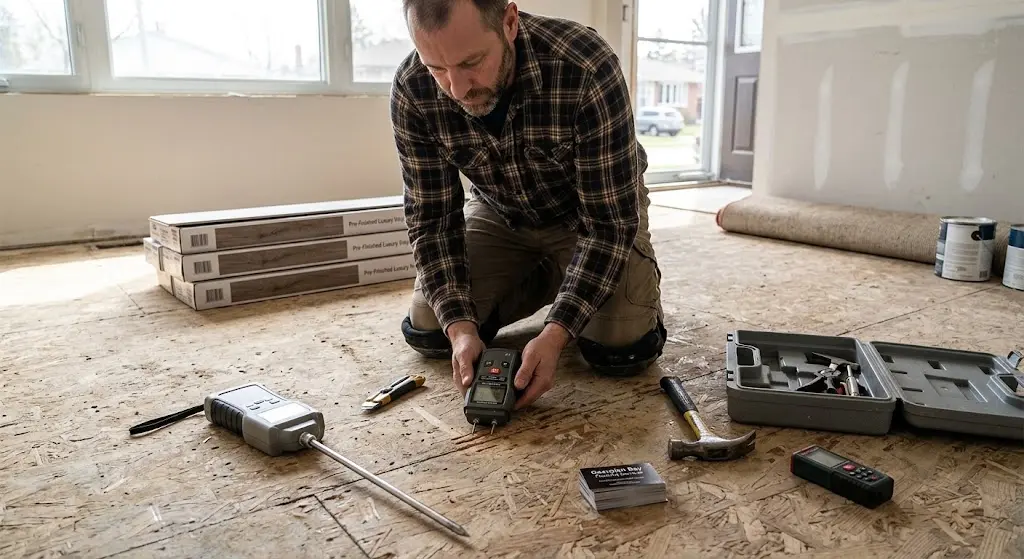
| “Tracey personally visited the job site and measured the material requirements. Preston did the demolition and the installation flawlessly, demonstrating top-notch expertise. The job was accomplished as scheduled and clean up was beyond expectations.”— Steve Y., Boulder Homeowner | LVP Installation |
Boulder’s 2026 Flooring Cheat Sheet
| 3 Rules for Choosing the Right Floor in Boulder County1. Boulder winters drop below 20% humidity. Engineered hardwood handles this; solid hardwood often does not.2. SPC LVP wins in mudrooms, basements, and kitchens. Engineered hardwood wins in living rooms and bedrooms.3. Most Boulder County projects land between $10 and $22 per sq ft installed. The right answer starts with a subfloor assessment. |
Frequently Asked Questions
What does it cost to install hardwood or SPC LVP in a Boulder County home?
For most Boulder County projects in 2026, SPC luxury vinyl plank runs $6 to $13 per square foot installed, while engineered hardwood typically runs $10 to $24 per square foot, depending on species and grade. Solid hardwood can reach $34 at the premium end, though most projects fall in the $14 to $22 range. These figures reflect Colorado labor rates, which run about 15% above the national average. An accurate number requires an on-site measure and subfloor assessment.
Does Boulder’s dry air really affect hardwood floors that much?
Yes, and more dramatically than most homeowners expect. Boulder’s winter relative humidity regularly drops below 20%, well below the 35 to 55% range the NWFA recommends for solid hardwood. At that level, solid planks shrink and dozens of small gaps open at every joint, visible and recurring each heating season. Engineered hardwood resists this significantly better due to its cross-layered core. If your home doesn’t have a whole-house humidifier, engineered is the far safer choice.
Is SPC LVP a downgrade from hardwood in resale value?
It depends on placement. SPC LVP in a basement, mudroom, or kitchen is often viewed positively by buyers because it signals smart material selection for those spaces. LVP in main living areas may not carry the same resale premium as genuine wood. The most common mistake is choosing solid hardwood throughout for resale appeal and then watching it gap every winter. A well-installed mix of engineered hardwood in living areas and quality SPC LVP in high-traffic zones serves both performance and resale better than a one-material approach.
Can I install hardwood in a Boulder basement?
Solid hardwood in a below-grade basement is not recommended in Boulder. Concrete subfloors retain moisture, and basements see wider temperature swings than main living floors, compounding the low-humidity gapping risk. Engineered hardwood with a proper moisture barrier is possible in some conditions, but SPC LVP is the cleaner, lower-risk solution for most Boulder basements. We assess each subfloor individually before making a recommendation.
How do I know which LVP products actually hold up in Colorado?
Look for SPC (Stone Plastic Composite) core construction, not WPC (Wood Plastic Composite). SPC handles Colorado’s temperature and humidity swings more reliably. Pair that with a 22mil or higher wear layer for high-traffic areas, or 20mil for bedrooms and lower-traffic rooms. Brands we carry with proven Colorado performance include Karndean, TRUCOR, and Mannington. Bring your room dimensions to the showroom and we’ll match the spec to your actual use case.
Ready to Decide? Start With a Showroom Visit
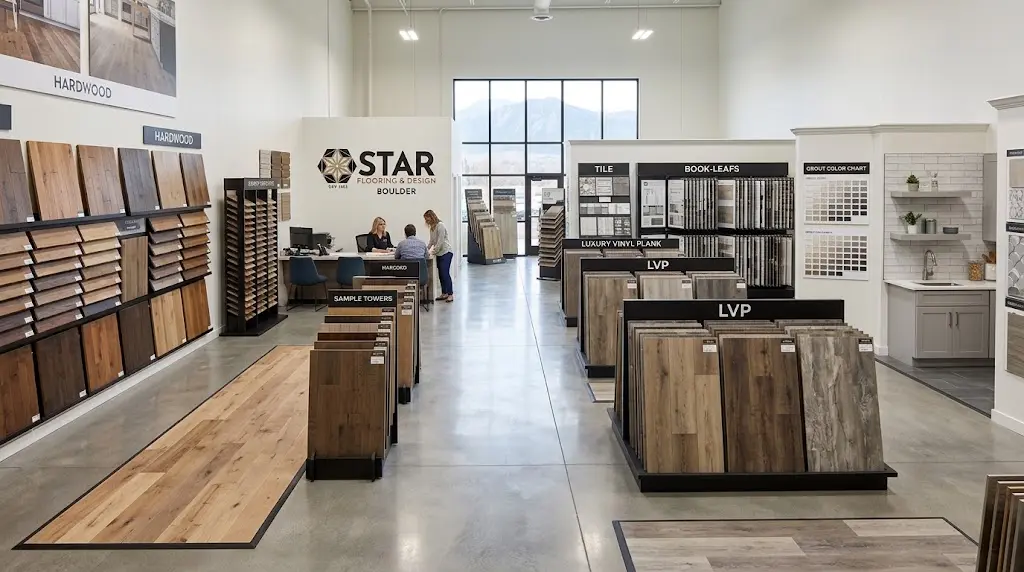
Choosing between hardwood and SPC LVP in Boulder’s climate is not a decision that belongs in a search engine. It belongs in a showroom, with real samples in your hands and someone who has installed floors in Mapleton Hill, South Boulder, Broomfield, and Estes Park telling you what actually holds up.
Star Flooring & Design has served Boulder County homeowners and builders since May 1, 1963. That’s over 60 years of understanding what Colorado’s altitude, dry winters, and active lifestyles do to floors. For a full room-by-room breakdown of every flooring material for Boulder homes, see our complete Boulder flooring guide coming soon at /flooring-guide-boulder-colorado/.
Stop in any day this week at 5785 Arapahoe Ave, Suite D, Boulder, CO 80303, or call our team at (303) 444-3411. No appointment needed. Bring your room dimensions and we’ll help you compare engineered hardwood, SPC LVP, and everything in between, including carpet, laminate, and tile, from brands we actually stand behind.
Boulder’s spring renovation season fills our installation calendar quickly. If you have a project in mind for the next 60 to 90 days, coming in now gives you the most selection and the best scheduling flexibility.
You Might Also Like
-
- Flooring
August 31, 2026
The Best Flooring for New Construction in Boulder County: A Builder’s Guide
-
-
- Flooring
August 11, 2026
Why Boulder Hardwood Floors Crack and Gap in Winter (And What to Do About It)


